
You have found a coffee that sounds great. Now comes another decision:
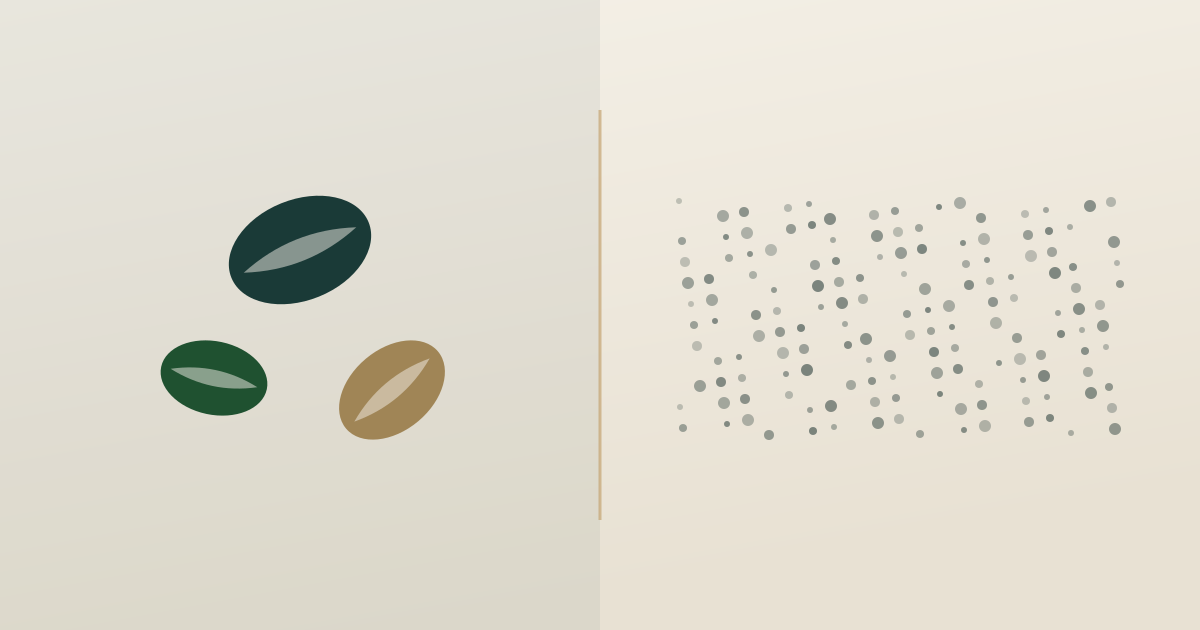
Should you buy it whole bean or ground?
The best answer depends on how you prepare coffee, how much convenience matters to you, and how much control you want over the final cup.
What Is Whole Bean Coffee?
Whole bean coffee has been roasted but has not yet been ground.
You grind the beans shortly before brewing using a coffee grinder.
The main advantage is simple: the bean remains intact for longer.
Once coffee is ground, much more of its surface is exposed to air. Aromatic compounds can dissipate more quickly, which is why freshly ground coffee often produces a more expressive aroma and flavor.
What Is Ground Coffee?
Ground coffee has already been processed to a particular grind size before you purchase it.
Its biggest advantage is convenience.
You can open the bag, measure your coffee, and begin brewing without owning a grinder.
For many coffee drinkers, that convenience is more valuable than having complete control over grind size.
And good ground coffee can still produce an excellent cup when it is fresh, stored properly, and ground appropriately for the intended brewing method.
Why Grind Size Matters
Not every brewing method requires the same grind.
Espresso generally requires a much finer grind than French press. Pour-over methods often fall somewhere between those extremes.
The size of the coffee particles affects how quickly water extracts soluble compounds from the coffee.
If the grind is much too fine, extraction can happen too quickly and the cup may become harsh or overly bitter.
If the grind is much too coarse, extraction may be insufficient and the coffee can taste weak, thin, or sharply sour.
Buying whole bean gives you the ability to adjust the grind for each brewing method.
Buying ground coffee means that decision has already been made for you.
When Whole Bean Makes Sense
Whole bean is an excellent choice when coffee flavor is a priority and you have access to a decent grinder.
It also makes sense if you use several brewing methods.
You could grind one coffee finer for an AeroPress and coarser for a French press, for example.
That flexibility is valuable when exploring specialty coffees whose characteristics can change noticeably depending on preparation.
When Ground Coffee Makes Sense
Ground coffee is ideal when simplicity matters most.
Perhaps you do not own a grinder. Maybe you drink coffee at work, travel frequently, or simply prefer a fast morning routine.
There is nothing wrong with choosing convenience.
The important part is ordering the correct grind for your brewing method whenever that option is available.
Does Whole Bean Coffee Always Taste Better?
Not automatically.
Poor-quality coffee does not become excellent because you grind it yourself.
Likewise, excellent coffee that is brewed incorrectly can still disappoint.
Freshness, water, brewing ratio, grind consistency, temperature, roast development, and the coffee itself all contribute to the result.
Whole bean simply gives you greater control over one important variable.
So, Which Should You Choose?
Choose whole bean if you want maximum flexibility, enjoy experimenting, and are willing to grind before brewing.
Choose ground coffee if convenience is more important and you already know the brewing method you will use.
Neither choice has to be complicated.
The best coffee is ultimately the one that fits your routine and gives you a cup you look forward to drinking.


Comments
No comments yet. Be the first to add one.