
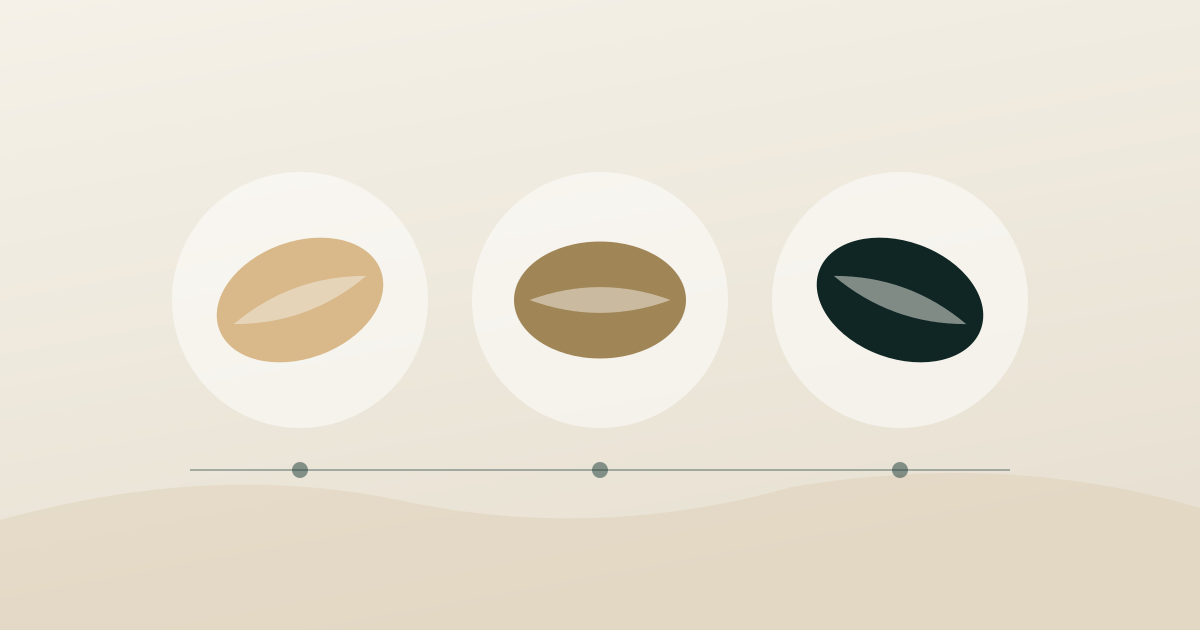
Light roast. Medium roast. Dark roast.
These labels appear everywhere, yet they can create more confusion than clarity.
The most important thing to understand is that roasting is not simply about making beans darker.
Roasting changes coffee chemically and physically, developing the aromas and flavors we associate with the beverage.
What Is Light Roast Coffee?
Light-roasted beans spend less time developing at high roasting temperatures than darker-roasted coffees.
They usually retain more characteristics associated with the coffee’s origin, variety, and processing.
You may encounter flavors described as floral, citrus, berry-like, stone fruit, tea-like, or bright.
Light roasts can also present more noticeable acidity.
That does not mean they should taste unpleasantly sour. A well-developed light roast can be sweet, complex, and balanced.
They are particularly popular for coffees where preserving delicate sensory characteristics is important.
What Is Medium Roast Coffee?
Medium roast often sits between origin expression and roast development.
The coffee may maintain fruit, acidity, and origin character while developing more caramelized, nutty, chocolate-like, or roasted characteristics.
This balance makes medium roast extremely versatile.
It can work well for drip coffee, pour-over, AeroPress, French press, and even espresso depending on the specific roast profile.
For people beginning to explore specialty coffee, medium roast can be an accessible place to start.
What Is Dark Roast Coffee?
Dark-roasted beans experience more intense roast development.
As roasting progresses, flavors produced by roasting can become increasingly dominant.
Dark coffees are often associated with deeper roast character, lower perceived acidity, bitterness, smoky notes, dark chocolate, toasted flavors, and a heavier sensory impression.
That does not automatically mean dark roast is low quality.
A well-executed dark roast may be exactly what someone wants, particularly for milk-based beverages or people who prefer a bold roasted profile.
Problems arise when roasting becomes so aggressive that the unique character of every coffee disappears.
Is Dark Roast Stronger?
The word “strong” creates confusion because it can mean several things.
Some people mean bitter. Some mean intense flavor. Others mean caffeine.
A darker roast can taste more intense because roast-derived flavors are prominent, but that does not necessarily mean it contains dramatically more caffeine in your cup.
Brewing ratio, dose, bean density, grind, and preparation method all influence the final beverage.
Does Light Roast Have More Acidity?
Light roasts often preserve more noticeable acidity.
But acidity in specialty coffee should not automatically be interpreted negatively.
Pleasant acidity can remind us of citrus, apple, berries, grapes, or other fruits.
Roasting degree affects the chemical composition of acids in brewed coffee, which helps explain why roast level can significantly alter our perception of acidity.
Which Roast Is Best?
There is no universal winner.
Choose light roast when you want to explore origin, floral character, fruit, and complexity.
Choose medium roast when you prefer balance.
Choose dark roast when you enjoy deeper roasted flavors and lower perceived brightness.
More importantly, pay attention to the specific coffee.
Origin, variety, processing, roast development, and brewing all work together.
Instead of asking which roast is objectively best, ask a better question:
Which roast produces the flavors I enjoy?
That question will take you much further.


Comments
No comments yet. Be the first to add one.